




 Send Inquiry
Nile Red
Price 1 INR/ Kilograms
Nile Red Specification
- Storage
- Store at 2~8°C, protected from light, in a tightly closed container
- Shelf Life
- 24 months
- HS Code
- 32042090
- Molecular Weight
- 318.37 g/mol
- EINECS No
- 231-355-8
- Properties
- Fluorescent dye, emits strong red fluorescence, highly sensitive
- Solubility
- Soluble in organic solvents (acetone, ethanol, DMSO); insoluble in water
- Product Type
- Organic Dye
- Molecular Formula
- C20H18N2O2
- Appearance
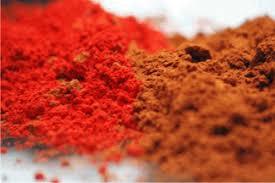
- Dark red to reddish-brown powder
- Physical Form
- Powder
- Ingredients
- Nile Red (9-diethylamino-5H-benzo[a]phenoxazin-5-one)
- Smell
- Odorless
- Purity
- >97%
- Grade
- Analytical Grade
- Application
- Fluorescence microscopy, lipid staining, tracer dye, biochemical research
- Poisonous
- No (handle as chemical reagent)
- Density
- 1.2 Gram per cubic centimeter(g/cm3)
- Melting Point
- 128-132°C
- Taste
- Odorless
- Shape
- Crystalline
- Structural Formula
- C20H18N2O2
- Usage
- Used as a fluorescent stain for detection of intracellular lipid droplets
- CAS No
- 7385-67-3
- Fluorescence Maxima (Excitation/Emission)
- 552/636 nm in ethanol
- Hazard Statement
- H315 + H319 + H335: Causes skin and eye irritation, may cause respiratory irritation
- Compatibility
- Compatible with most organic solvents
- Stability
- Stable under recommended storage conditions
- Synonyms
- Nile Blue A oxazone, Nile red dye
- Transport Classification
- Non-hazardous; handle as laboratory chemical
- Sensitivity
- Fluorescence highly sensitive to polarity of surrounding environment
- Packing Size
- 1g, 5g, 10g or as required
Nile Red Trade Information
- Minimum Order Quantity
- 25 Kilograms
- Supply Ability
- 100 Kilograms Per Week
- Delivery Time
- 1 Week
About Nile Red
NILE RED
Features:
- Accurate pH value
- High effectiveness
- Non-toxic nature
- Longer shelf life
Exceptional Sensitivity for Lipid Detection
Nile Red stands out for its extraordinary sensitivity to environmental polarity, enabling highly specific detection of intracellular lipid droplets. Ideal for fluorescence microscopy, it delivers strong, discernible red fluorescence signals, making it a superior choice for researchers investigating lipid distribution and dynamics within cells and tissues.
Versatile Application and Solubility
Compatible with most organic solvents and insoluble in water, Nile Red provides versatility for a range of research protocols. Its high purity (>97%) and stability ensure reliable and reproducible results across biochemical assays, including lipid staining and tracer studies. It is supplied in multiple packing sizes for convenience.
FAQs of Nile Red:
Q: How is Nile Red commonly used in research laboratories?
A: Nile Red is widely utilized as a fluorescent stain for the selective detection of intracellular lipid droplets. Its strong red fluorescence signal enables researchers to visualize and quantify lipids in cells and biological samples using fluorescence microscopy techniques.Q: What is the recommended method for storing Nile Red to maintain stability?
A: To preserve its stability and fluorescent properties, Nile Red should be stored in a tightly closed container at 28C, protected from light. Under these conditions, it retains its efficacy for up to 24 months.Q: When does Nile Red exhibit maximal fluorescence, and why is solvent choice important?
A: Nile Red shows maximal fluorescence with excitation at 552 nm and emission at 636 nm in ethanol. Its fluorescence intensity is highly sensitive to the polarity of the solvent, so using organic solvents like ethanol, acetone, or DMSO ensures optimal staining and detection.Q: Where can Nile Red be applied in scientific workflows?
A: Nile Red is suitable for fluorescence microscopy, lipid staining, tracer dye applications, and broader biochemical research. It is particularly effective for visualizing lipid content in biological and clinical samples.Q: What benefits does Nile Red offer over other fluorescent dyes?
A: Nile Red provides strong, easily detectable red fluorescence with high specificity to lipid environments. Its sensitivity to environmental polarity allows for precise and reliable discrimination of lipophilic structures in complex biological samples.Q: How should researchers handle and transport Nile Red safely?
A: Although classified as non-hazardous for transport, Nile Red can cause skin and eye irritation, and may irritate the respiratory system. Always handle it using standard laboratory protective measures and treat it as a chemical reagent.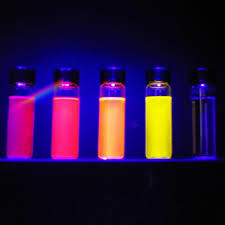

Price:
- 50
- 100
- 200
- 250
- 500
- 1000+

More Products in Lab Chemicals Category
Dithizone 98%
Price 1 INR / Kilograms
Minimum Order Quantity : 25 Kilograms
Molecular Formula : C13H12N4S
Appearance : Dark green to black crystalline powder
Product Type : Organic Compound
Physical Form : Powder
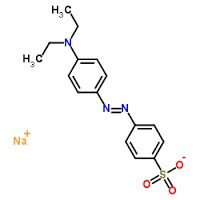
Ethyl Orange Sodium Salt
Price 1 INR / Kilograms
Minimum Order Quantity : 25 Kilograms
Molecular Formula : C16H11N2NaO4S
Appearance : Orange to orangered powder
Product Type : pH Indicator Dye (Laboratory Reagent)
Physical Form : Other, Solid (Powder)
Chromotrope 2r
Price 1 INR / Kilograms
Minimum Order Quantity : 25 Kilograms
Molecular Formula : C16H10N2Na2O8S2
Appearance : Reddish powder
Product Type : Acid Dye
Physical Form : Powder
Anthrone
Price 1 INR / Kilograms
Minimum Order Quantity : 25 Kilograms
Molecular Formula : C14H10O
Appearance : Yellowish to green crystalline powder
Product Type : Organic Compound
Physical Form : Powder

GST : 27AARCA1049D1ZS


|
 |
KARAN LABORATES
All Rights Reserved.(Terms of Use) Developed and Managed by Infocom Network Private Limited. |
