




 Send Inquiry
Thioflavin T
Price 1 INR/ Kilograms
Thioflavin T Specification
- Purity
- >98% (HPLC)
- HS Code
- 32049000
- Poisonous
- Yes (handle with care)
- Properties
- Fluorescent dye, used as a histology stain for amyloid fibrils detection
- Usage
- Suitable for laboratory research and diagnostics
- Ph Level
- Neutral in solution
- Melting Point
- 155-159C
- Physical Form
- Powder
- Grade
- Analytical Reagent (AR), Laboratory Grade
- Structural Formula
- C17H19ClN2S
- EINECS No
- 219-232-0
- Taste
- Not determined
- Appearance
- Yellow to greenish-yellow crystalline powder
- Molecular Weight
- 318.87 g/mol
- Product Type
- Organic Compound
- Smell
- Odorless
- Shape
- Crystalline
- Application
- Biological staining, amyloid detection, fluorescent probe
- Molecular Formula
- C17H19ClN2S
- Density
- Gram per cubic centimeter(g/cm3)
- Ingredients
- Thioflavin T
- Solubility
- Soluble in water, ethanol, methanol
- Refractive Rate
- Not determined
- CAS No
- 2390-54-7
- Shelf Life
- 24 months
- Storage
- Store at 2-8C, dry and protected from light
- Fluorescence Emission
- 482 nm (upon binding amyloid)
- Stability
- Stable under recommended storage conditions
- Transport Information
- Non-dangerous for transport as per IATA/IMDG
- RTECS Number
- XT9456900
- Hazard Statement
- Irritant, potential health hazard, use protective equipment
- Disposal
- Dispose of according to local regulations
- Synonyms
- Basic yellow 1, ThT, CI 49005
- Absorption Maximum (max)
- 412 nm (in water)
- Boiling Point
- Not applicable (decomposes)
- Packing Details
- Sealed in light-resistant container
- UN Number
- Not regulated
Thioflavin T Trade Information
- Minimum Order Quantity
- 25 Kilograms
- Supply Ability
- 100 Kilograms Per Week
- Delivery Time
- 1 Week
About Thioflavin T
THIOFLAVIN T
Features:
- Longer shelf life
- Accurate pH value
- Highly reactive
- Better chemical stability
Key Properties and Analytical Grade Quality
Thioflavin T features a purity greater than 98% (HPLC) and serves as a reliable histology stain for amyloid fibrils detection in laboratory research. Its crystalline powder form is odorless and maintains stability under recommended storage. Being non-hazardous for transport as per IATA/IMDG, it is conveniently shipped in tightly sealed, light-resistant containers to maintain integrity and shelf life.
Application in Biological and Diagnostic Research
Widely used as a fluorescent probe, Thioflavin T is integral in visualizing amyloid deposits, making it essential in research on neurodegenerative disorders. It displays bright fluorescence upon binding to amyloid structures, offering scientists a clear advantage in amyloid quantification and localization. Suitable for both research and diagnostic environments, its application extends to various analytical protocols.
FAQs of Thioflavin T:
Q: How is Thioflavin T used in laboratory research?
A: Thioflavin T is typically utilized as a fluorescent dye to stain and detect amyloid fibrils in biological samples. When it binds to amyloid structures, it emits fluorescence at 482 nm, making it valuable for visualizing and quantifying amyloid deposits in diagnostic and research protocols.Q: What safety precautions should be followed when handling Thioflavin T?
A: Due to its potential irritant and poisonous nature, personal protective equipment such as gloves, lab coats, and eye protection should be worn. Work in a well-ventilated area and avoid direct inhalation or contact. Dispose of any waste according to local regulations.Q: When should Thioflavin T solutions be prepared for optimal results?
A: For best fluorescence properties and consistent results, prepare Thioflavin T solutions fresh before each experiment. Always use analytical grade solvents and protect the dye from exposure to light during preparation and use.Q: Where should Thioflavin T be stored to maximize shelf life?
A: Store Thioflavin T at a temperature between 28C in a dry environment and protect it from light by keeping it in its original, tightly sealed light-resistant container. Under these conditions, the product retains its quality for up to 24 months.Q: What is the process for staining amyloid fibrils using Thioflavin T?
A: Begin by preparing a suitable concentration of Thioflavin T solution in water or alcohol. Apply the solution to the biological specimen, incubate according to optimized protocols, then wash off excess dye. Examine the sample under a fluorescence microscope to observe and quantify amyloid structures, utilizing the characteristic strong fluorescence of ThT upon binding.Q: What are the benefits of using Thioflavin T in amyloid detection?
A: Thioflavin T delivers high sensitivity and specificity in detecting amyloid fibrils, enabling clear visualization thanks to its bright fluorescence. Its use accelerates the identification and quantification of amyloids, supporting advanced research in neurodegenerative diseases and related diagnostics.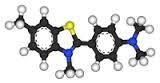

Price:
- 50
- 100
- 200
- 250
- 500
- 1000+

More Products in Lab Chemicals Category
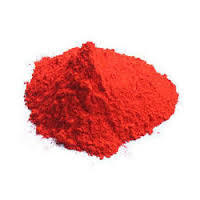
Parachloroacetanilide
Price 1 INR / Kilograms
Minimum Order Quantity : 25 Kilograms
Usage : Raw material for manufacturing drugs, dyes, and agrochemicals
Ph Level : Neutral
Melting Point : 162164C
Grade : Industrial
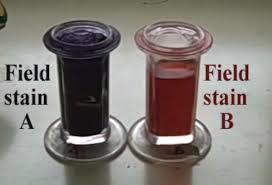
Field Stain B
Price 1 INR / Kilograms
Minimum Order Quantity : 25 Kilograms
Usage : For detection of blood parasites and cell morphology in laboratory analysis
Ph Level : 6.8 7.2
Melting Point : Not applicable (liquid)
Grade : Laboratory/Research Grade
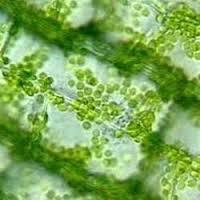
Janus Green
Price 1 INR / Kilograms
Minimum Order Quantity : 25 Kilograms
Usage : Laboratory analytical reagent, staining biological tissues, mitochondrial staining.
Ph Level : Not applicable as solid; solutions are typically neutral to slightly basic
Melting Point : >200C (decomposes)
Grade : Laboratory Grade
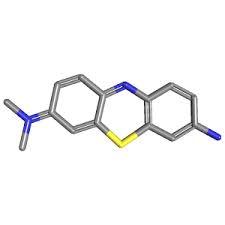
Azur C
Price 1 INR / Kilograms
Minimum Order Quantity : 25 Kilograms
Usage : Used as a dye and stain for biological tissues and cells
Ph Level : pH 4 6 (1% solution)
Melting Point : Approx. 220C (decomposes)
Grade : Laboratory Grade

GST : 27AARCA1049D1ZS


|
 |
KARAN LABORATES
All Rights Reserved.(Terms of Use) Developed and Managed by Infocom Network Private Limited. |
